

Best Moderate Risk Mutual Funds in India
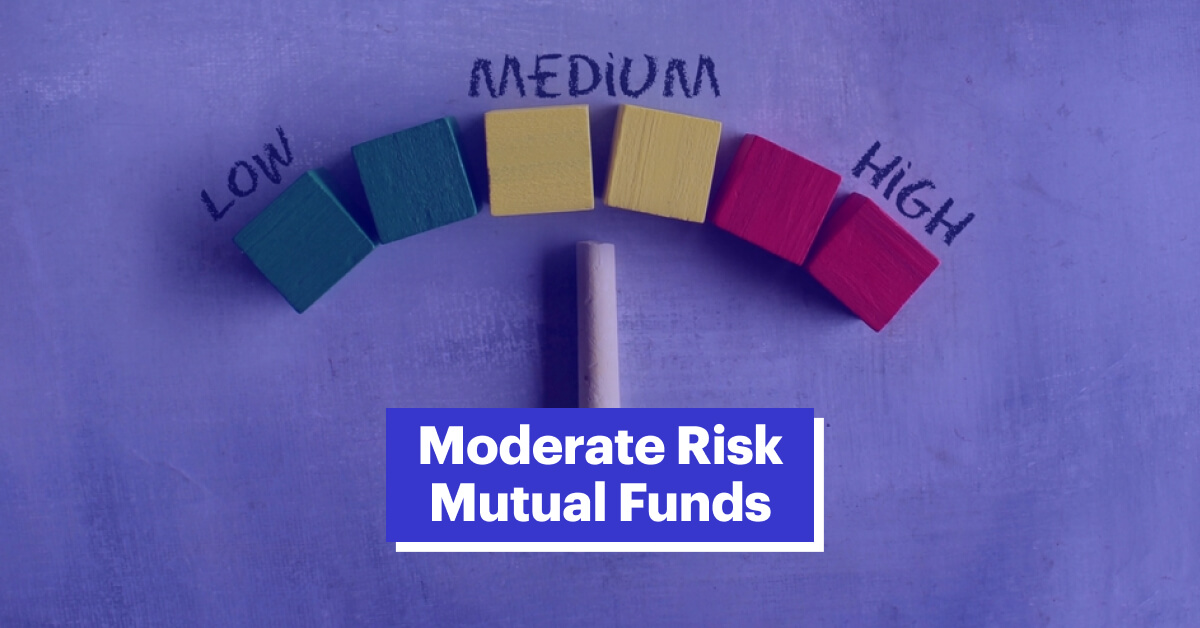
Moderate-risk mutual funds aim to balance growth and stability by investing in a mix of equity and debt instruments. These funds cater to investors seeking steady returns with controlled risk exposure, making them ideal for medium-term financial goals.
Moderate Risk Mutual Funds
| Name | Sub Category | AUM (in Cr.) | CAGR 3Y (%) | Expense Ratio (%) | Volatility (%) | Sharpe Ratio |
|---|---|---|---|---|---|---|
| Tata Large Cap Fund | Large Cap Fund | 2,435.52 | 15.77 | 1.03 | 14.97 | 1.26 |
| Union Largecap Fund | Large Cap Fund | 438.15 | 12.90 | 1.58 | 14.95 | 1.11 |
| Baroda BNP Paribas Business Cycle Fund | Thematic Fund | 597.77 | 20.24 | 0.85 | 14.87 | 1.70 |
| UTI Mid Cap Fund | Mid Cap Fund | 12,029.01 | 19.55 | 0.89 | 14.87 | 1.68 |
| ICICI Pru Smallcap Fund | Small Cap Fund | 8,374.54 | 21.63 | 0.76 | 14.84 | 1.37 |
| HSBC Aggressive Hybrid Fund | Aggressive Hybrid Fund | 5,719.93 | 16.18 | 0.82 | 14.80 | 1.67 |
| SBI International Access-US Equity FoF | FoFs (Overseas) | 980.62 | 13.12 | 0.9 | 14.79 | 2.01 |
| Kotak Small Cap Fund | Small Cap Fund | 17,593.30 | 20.75 | 0.49 | 14.79 | 1.87 |
| Tata Quant Fund | Thematic Fund | 67.08 | 16.18 | 0.88 | 14.77 | 1.09 |
| Taurus ELSS Tax Saver Fund | Equity Linked Savings Scheme (ELSS) | 79.74 | 20.03 | 1.95 | 14.77 | 1.59 |
Disclaimer: Please note that the above list is for educational purposes only, and is not recommendatory. Please do your own research or consult your financial advisor before investing.
Note: The data on the moderate risk mutual funds is from 10th December, 2024. However, for real-time updates on stock prices and market trends, visit the Tickertape Mutual Funds Screener today!
Selection Criteria:
- CAGR 3Y (%): Set to Positive
- Volatility (%): Mid, Sorted from highest to lowest
- Sharpe Ratio
What Are Moderate Risk Mutual Funds?
Moderate risk mutual funds are investment instruments that aim to strike a balance between risk and reward. They are typically suitable for investors who want better returns than fixed-income instruments but are not comfortable with the high risks of equity-heavy portfolios. These funds usually allocate their investments across a mix of equity funds and debt funds, ensuring moderate exposure to market volatility.
Types of Moderate Risk Mutual Funds
- Balanced Funds: These funds maintain a near-equal distribution between equity and debt.
- Hybrid Funds: These include aggressive or conservative hybrid funds, depending on the equity-to-debt ratio.
- Debt-Oriented Funds: These invest primarily in fixed-income securities with a smaller equity component for growth.
How to Invest in Moderate Risk Mutual Funds?
Investing in moderate risk mutual funds is straightforward:
- Research and Identify Funds: Begin by shortlisting the top moderate risk mutual funds based on historical performance, asset allocation, and risk metrics. Also, check research the fund manager’s expertise.
- Select an Investment Mode: Choose between a lump sum investment or a moderate risk SIP (Systematic Investment Plan) for consistent and disciplined investing.
- Use Investment Platforms: Invest through a mutual fund house, a financial advisor, or online investment platforms.
Investing in Moderate Risk Mutual Funds via smallcase
You can also invest in moderate risk mutual funds via smallcase. Simply go to smallcase.com or the smallcase app, and login via your phone number. Then, go to ‘Discover‘ and enter the name of the specific mutual fund name in the search bar and hit enter. You’ll find the performance of the mutual fund and the minimum investment amount. Decide the particular amount you want to invest based on your financial goals and click on ‘Invest now’.
How to Choose the Best Moderate Risk Mutual Funds for Investing?
Selecting the best mutual fund with moderate risk involves careful evaluation:
- Historical Performance: Check the fund’s track record over 3, 5, and 10 years.
- Fund Manager Expertise: Ensure the fund is managed by experienced professionals with a history of delivering consistent returns.
- Expense Ratio: Search for funds with an expense ratio below 1.5% for regular plans and 0.5% for direct plans.
- Asset Allocation: Look for funds with a balanced mix of equity and debt.
- Risk Metrics: Prefer funds with a standard deviation below 15%, a beta close to or below 1, and a Sharpe ratio greater than 1 for favorable risk-adjusted returns.
- Peer Comparison: Compare the fund’s performance with other best moderate risk mutual funds in the same category, delivering at least 8-10% annualised returns over 3 to 5 years.
Who Should Invest in Moderate Risk Mutual Funds?
The best mutual funds for moderate risk are suitable for:
- Young Professionals: Looking for better returns than fixed deposits but unwilling to take high risks.
- First-Time Investors: Those entering the mutual fund market and preferring low to moderate risk mutual funds.
- Middle-Aged Investors: Seeking to balance portfolio growth with stability as they approach retirement.
- Goal-Oriented Investors: Individuals with medium-term financial goals like buying a car, planning a vacation, or creating a contingency fund.
Taxation on Moderate Risk Mutual Funds
The tax treatment of moderate risk mutual funds depends on the equity-debt allocation:
| Capital Gains Type | Holding Period | Tax Rate |
| Short-Term Capital Gains (STCG) | Less than 12 months | 20% |
| Long-Term Capital Gains (LTCG) | More than 12 months | 12.50% |
Advantages of Investing in Moderate Risk Mutual Funds
Investing in moderate risk funds comes with several benefits:
- Steady Growth Potential: These funds aim for consistent performance over time by balancing equity and debt.
- Diversification Benefits: Investing in a mix of assets reduces the risk of significant losses.
- Affordable Entry: Through moderate risk SIP, investors can start with as little as ₹500 per month.
- Liquidity: Most mutual funds offer easy redemption, providing quick access to your investments when needed.
Risks Involved While Investing in Moderate Risk Mutual Funds
While moderate risk funds offer a balanced approach, they are not risk-free:
- Market Risk: Equity portions can decline sharply during downturns, potentially impacting returns in unfavorable markets.
- Interest Rate Risk: Rising interest rates reduce debt security values, with even a 1% hike potentially lowering bond value by 5-7%.
- Credit Risk: Lower-rated debt instruments risk default, particularly in funds exposed to non-government securities or weak corporate bonds.
- Inflation Risk: Returns may underperform inflation exceeding 6-7%, diminishing the real purchasing power of your investments.
To Wrap it Up
Moderate risk mutual funds provide a compelling investment avenue for those looking to balance growth and stability. Whether you’re a first-time investor or someone planning for medium-term financial goals, these funds can play a pivotal role in your investment strategy. By understanding their features, benefits, and risks, and by choosing the best mutual fund with moderate risk, you can create a diversified moderate risk mutual fund portfolio tailored to your needs.
Invest wisely, and remember that while mutual funds are subject to market risks, a balanced approach like that offered by medium risk mutual funds can help you achieve steady growth while managing volatility effectively.
Read More About Loan Against Mutual Funds
LAMF AMCs
Discover More About Loan Against Securities
Frequently Asked Questions About Moderate Risk Mutual Funds
Here are some of the best mutual funds with moderate risk based on Volatility as of 17th June, 2026:
– Tata Large Cap Fund
– Union Largecap Fund
– Baroda BNP Paribas Business Cycle Fund
– UTI Mid Cap Fund
– ICICI Pru Smallcap Fund
Note: This data is educational and not recommendatory in nature.
Key factors include the fund’s historical performance, asset allocation, expense ratio, risk metrics like Sharpe ratio, and alignment with your financial goals and risk tolerance.
Disclaimer: Moderate risk mutual funds are subject to market risks, and past performance does not guarantee future returns. Investors should assess their financial goals, investment horizon, and risk appetite before investing. It is advisable to consult a financial advisor before making any investment decision.
Yes, equity-oriented moderate risk funds are taxed at 20% (STCG) for holdings under one year and 12.5% (LTCG) for gains over ₹1 lakh after one year.
The best medium risk mutual funds balance equity and debt for steady returns with medium risk, while low-risk funds focus on stable, low-return investments like debt securities, and high-risk funds invest heavily in equities, offering higher returns but greater volatility.
Examples include hybrid mutual funds, balanced advantage funds, debt-oriented funds with equity exposure, and multi-asset allocation funds, combining growth potential with risk mitigation.